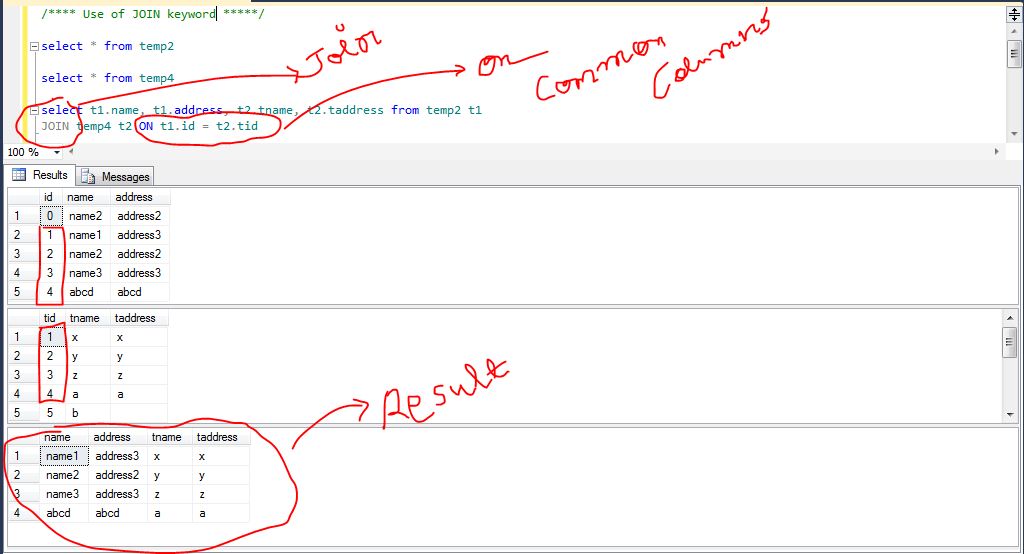
JOIN Keyword we use in SQL statement to query data from two or more tables, based on a relationship we provide in statement.
the relationship is join between two table with the same columns and keys.
for example: the syntax would be
select t1.tablecolumn1, t1.tablecolumn2, t2.tablecolumn1, t2.tablecolumn2
from sometable1 t1 JOIN sometable2 t2 ON t1.tablecolumn1 = t2.tablecolumn1
to do join between two or more tables we need one single common key column both tables should have.
Types of Join we use and differences in them
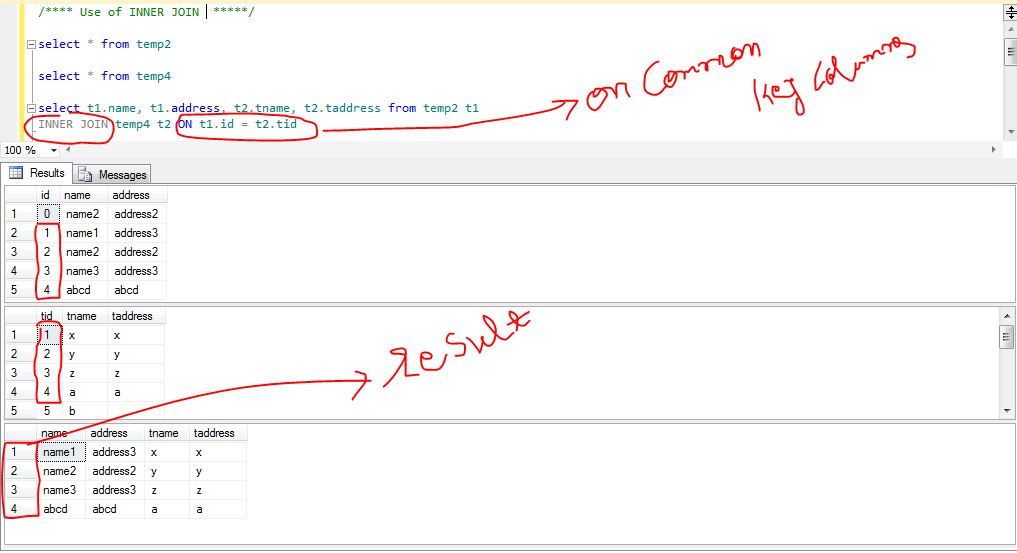
1. JOIN (Inner Join): Return rows when there is at least one match in both tables
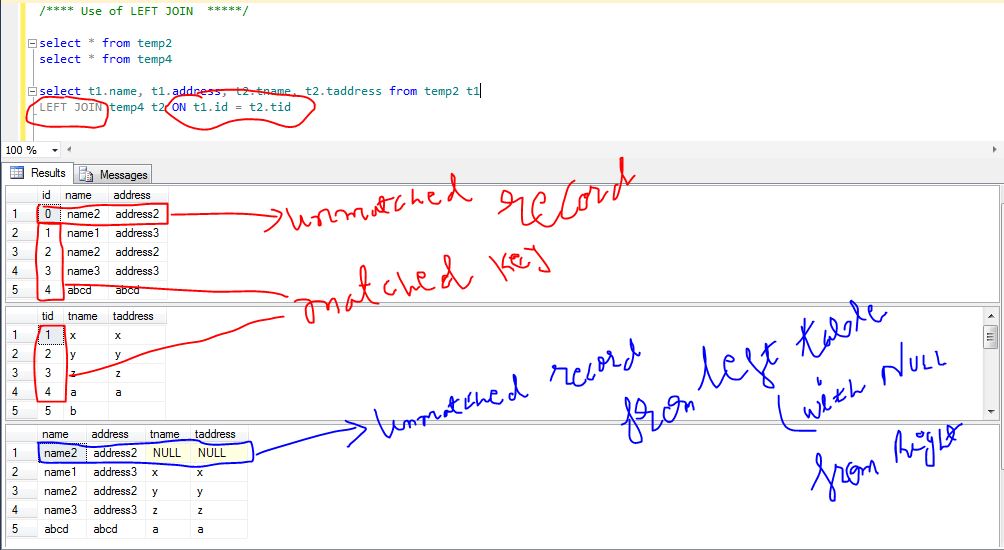
2. LEFT JOIN: Return all rows from the left table, even if there are no matches in the right table
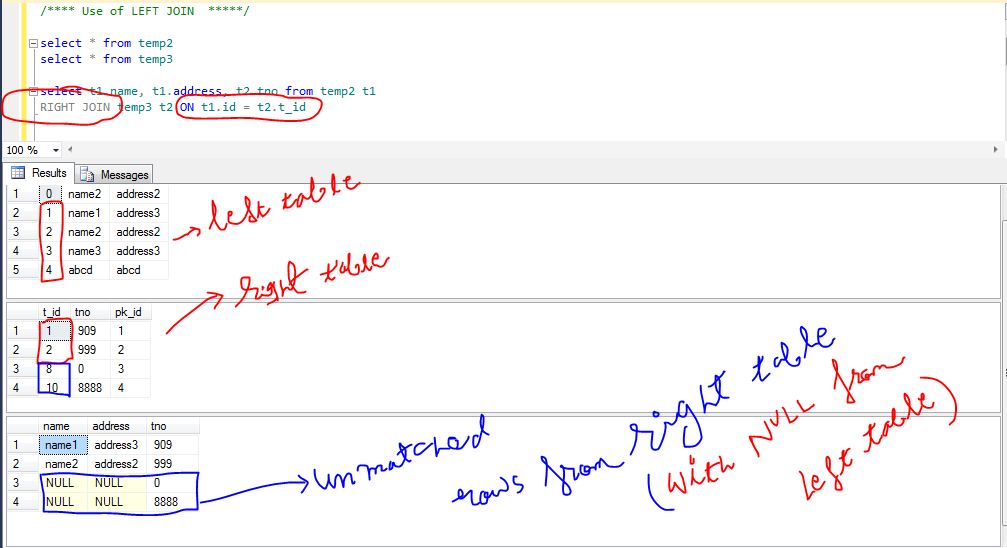
3. RIGHT JOIN: Return all rows from the Right table, even if there are no matches in the left table
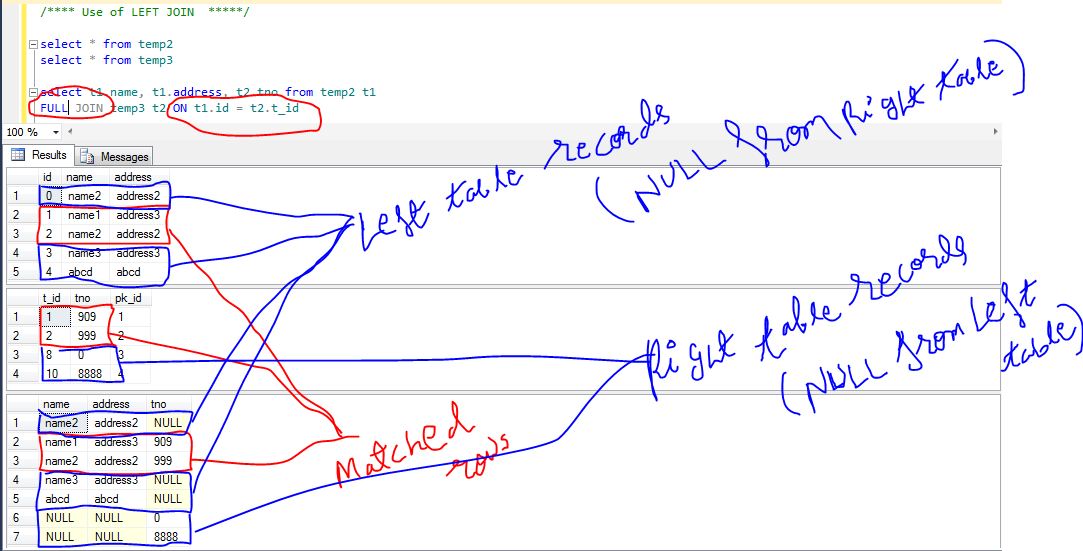
4. FULL JOIN: Return rows when there is a match in one of the tables
Joins with Example.
INNER JOIN
syntax with example
select t1.tablecolumn1, t1.tablecolumn2, t2.tablecolumn1, t2.tablecolumn2
from sometable1 t1 INNER JOIN sometable2 t2 ON t1.tablecolumn1 = t2.tablecolumn1
LEFT JOIN
syntax with example:
select t1.tablecolumn1, t1.tablecolumn2, t2.tablecolumn1, t2.tablecolumn2
from sometable1 t1 LEFT JOIN sometable2 t2 ON t1.tablecolumn1 = t2.tablecolumn1
RIGHT JOIN
syntax with example:
select t1.tablecolumn1, t1.tablecolumn2, t2.tablecolumn1, t2.tablecolumn2
from sometable1 t1 RIGHT JOIN sometable2 t2 ON t1.tablecolumn1 = t2.tablecolumn1
FULL JOIN
syntax with example:
select t1.tablecolumn1, t1.tablecolumn2, t2.tablecolumn1, t2.tablecolumn2
from sometable1 t1 FULL JOIN sometable2 t2 ON t1.tablecolumn1 = t2.tablecolumn1
 Understand SQL Server and BI technologies